


Wisenet 9: AI-Native Imaging
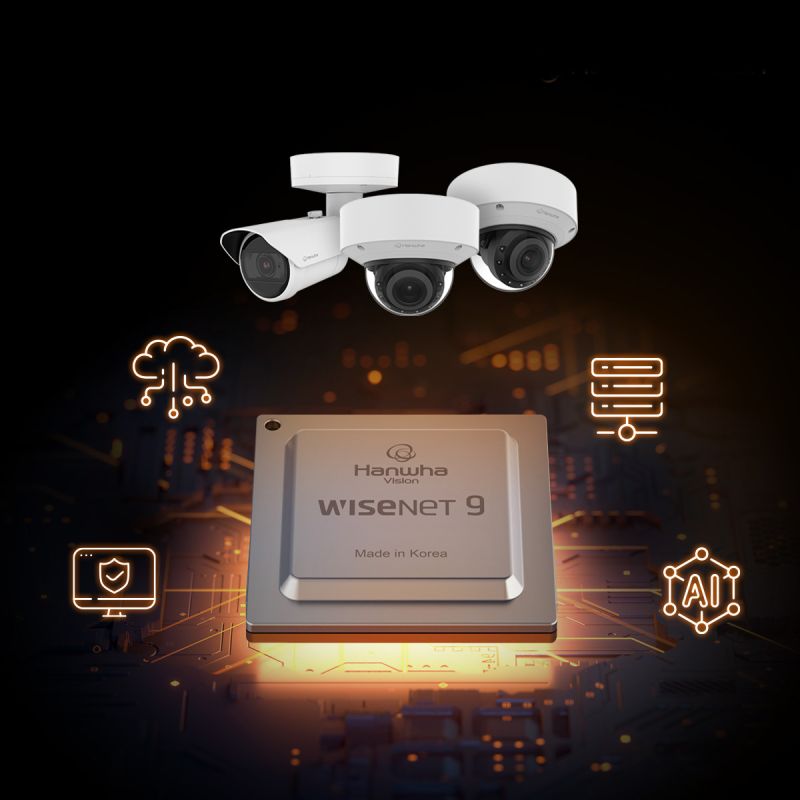
The chipset inside a camera determines what it can see and think. Wisenet 9 is Hanwha Vision's newest AI-native system-on-chip (SoC), and it represents a real architectural step rather than an incremental bump.
Dual NPU architecture
Wisenet 9's defining feature is two neural processing units working in parallel: one dedicated to image processing, the other to object detection and analytics. Splitting the work means heavy analytics don't degrade video quality and vice versa — each function has its own resources. In practice, you get strong AI object detection and clean images simultaneously, which earlier single-engine designs had to trade off against each other.
Imaging gains
The chip pairs AI-based noise reduction with conventional noise reduction to clean up difficult low-light scenes, and uses multi-frame eXtreme WDR to hold detail across harsh lighting — bright windows behind dark interiors, headlights against night. Combined with H.265 and WiseStream compression, it reduces bandwidth and storage without sacrificing clarity.
Cloud-native and manageable
Wisenet 9 cameras are natively supported by Hanwha's cloud applications, including OnCloud and SightMind, so they integrate and can be managed remotely without extra appliances. HealthPro reports on each device's health, and Wisepower ECO mode optimizes power draw — features that matter when you're maintaining a large fleet of cameras.
Why it matters
For higher-value scenes — entrances, points of sale, LPR lanes, anywhere accurate AI detection and image quality both matter — Wisenet 9's dual-NPU design delivers both at once, which is exactly where analytics-driven security earns its keep.
Join the homes and businesses that trust PDI for security.


