

Access Control for Businesses: Beyond the Brass Key
The traditional key has quietly become one of the biggest liabilities in business security. Keys get copied without your knowledge. When an employee leaves, you either trust that they returned every copy or pay to rekey the building. You have no record of who entered, when, or where. For any business beyond the smallest, electronic access control solves these problems while adding capabilities a key could never offer.
The limitations of keys
Consider what a brass key can't do. It can't be restricted to business hours. It can't be revoked instantly when someone is terminated. It can't tell you that the stockroom was entered at 2 a.m. on a Sunday. It can't grant a vendor access to one area but not another. And every copy in circulation is a permanent, untraceable vulnerability. For a business with employee turnover, multiple sensitive areas, or after-hours risk, these gaps add up quickly.
What access control provides
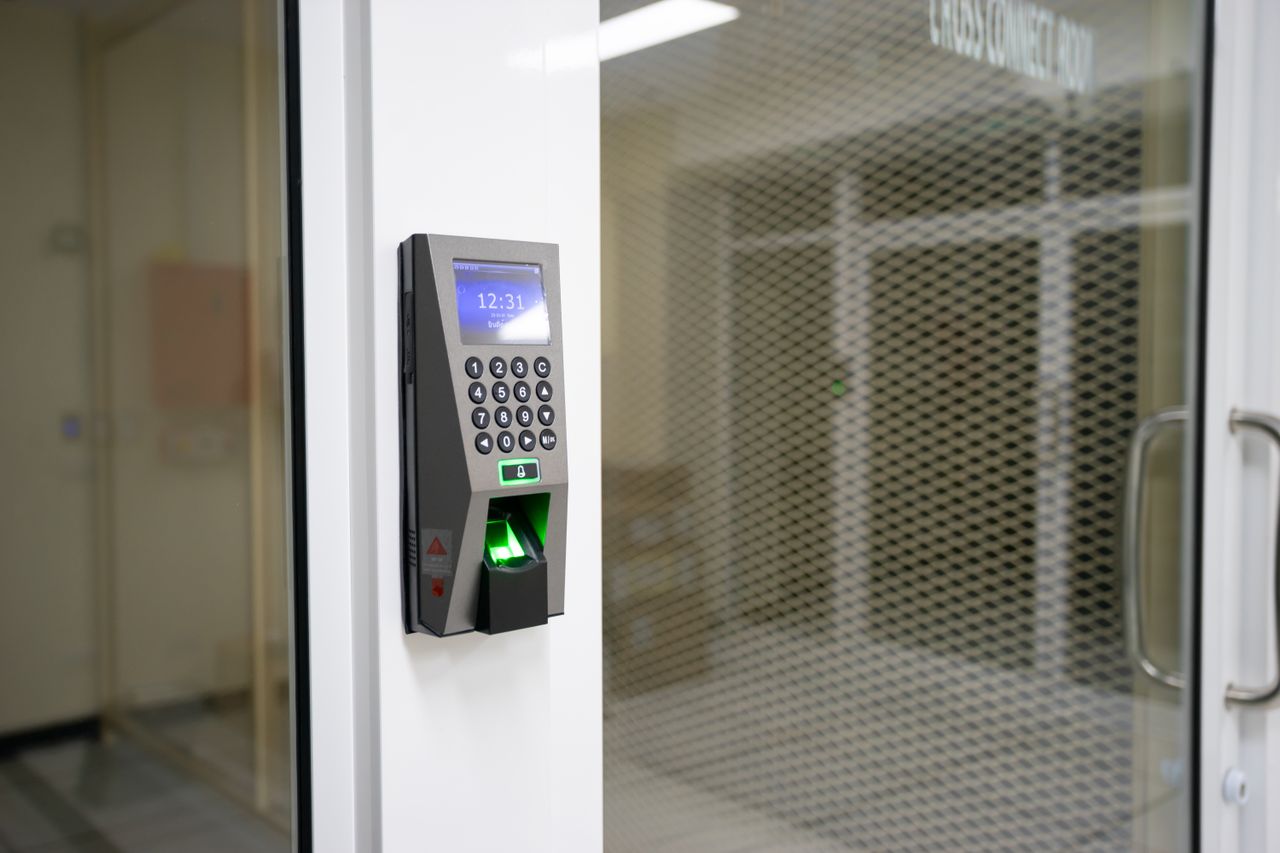
Electronic access control replaces keys with credentials, cards, fobs, codes, or mobile credentials, that you manage centrally. The benefits are substantial:
- Instant revocation. When an employee leaves, you deactivate their credential in seconds. No rekeying, no chasing down copies, no risk from a key that was never returned.
- Granular permissions. Grant each person access only to the areas they need. The sales team doesn't need the server room; the cleaning crew might need the lobby but not the finance office.
- Schedule-based access. Restrict entry to business hours, or give specific people after-hours access while keeping it closed to everyone else.
- Audit trails. Every entry is logged. If something goes missing or an incident occurs, you can see exactly who accessed the area and when.
Securing sensitive areas
Access control shines for protecting the spaces within your business that warrant extra care: server and IT rooms, finance and records areas, stockrooms holding valuable inventory, and any space with sensitive customer or business data. By restricting these to a short list of authorized people and logging every entry, you dramatically reduce both opportunity and ambiguity if a problem arises.
Accountability protects everyone
Audit trails aren't about surveillance for its own sake; they're about accountability that protects honest employees as much as the business. When entry is logged, an employee who had nothing to do with a missing item can be cleared just as quickly as a problem can be identified. Clear, consistently applied access policies create an environment where everyone knows the rules and the rules apply evenly.
Integration with your wider system
Access control delivers the most value when it works alongside your other systems. Integrated with video, an access event can be tied to camera footage, so you can see who actually used a credential, not just which credential was used. Integrated with your alarm, the system can automatically arm when the last person leaves and disarm for authorized entry. This coordination turns separate components into a single, coherent security platform.
Planning your system
The right access control system depends on your building, your number of users, the areas you need to secure, and how you expect to grow. Start by mapping which people need access to which areas at which times, then design the credential and permission structure around that map. A professional assessment ensures the system fits your actual workflow rather than forcing your workflow to fit the system.
The bottom line
For most businesses, moving beyond mechanical keys is one of the highest-impact security upgrades available. It closes the chronic vulnerabilities of lost and copied keys, adds accountability through logging, and gives you precise control over who goes where and when, all managed from a single point.
Protecting Life and Property Since 1964. Contact PDI Security Systems to design an access control system for your business.
Join the homes and businesses that trust PDI for security.


